Choosing the Right Dune Buggy for Dubai's Desert Terrain
Driving across Dubai's red sands is an experience that demands more than just a powerful engine. The desert here is not a flat stretch of soft ground. It shifts constantly, with steep dunes, sudden drops, and patches of hard-packed gravel that can surprise even an experienced driver. The machine you take into that landscape determines whether the trip is thrilling or exhausting. Picking the right dune buggy means matching the vehicle's design to the specific conditions you will face.
Most people start by looking at engine power, and that is a fair place to begin. But a buggy that works well on a racetrack or a coastal trail may behave very differently when the wheels hit loose sand. The frame, the suspension, the steering, and even the tyres all play a role in how the buggy handles. Understanding what each part does for you on the dunes helps narrow down the choices without getting lost in spec sheets.
Start with the Frame and Ground Clearance
The frame of a dune buggy is its backbone. In the desert, the vehicle will twist and tilt as it rides over uneven slopes. A lightweight frame helps the buggy climb dunes more easily because it puts less weight on the engine. Heavier frames feel stable on flat ground but can bog down in soft sand. Look for a buggy that uses tubular steel or aluminium construction. These materials keep the weight down without sacrificing strength.
High ground clearance is another factor that matters more in the desert than on a track. When you crest a dune, the nose of the buggy lifts and the underside can scrape against the sand. A buggy with at least 25 to 30 centimetres of clearance lets the chassis pass over the crest without digging in. Low-slung buggies look aggressive but they tend to catch on the sand, which can stall your momentum at the worst moment.
Engine Displacement and Power Delivery
Engine size is usually the first number people check. In a dune buggy, the engine's displacement affects how much torque you get at low speeds. A larger engine, say above 600cc, gives you the grunt to push up a steep dune without needing a long run-up. Smaller engines, around 250cc to 400cc, are lighter and more nimble but require you to carry speed through the sand to avoid getting stuck.
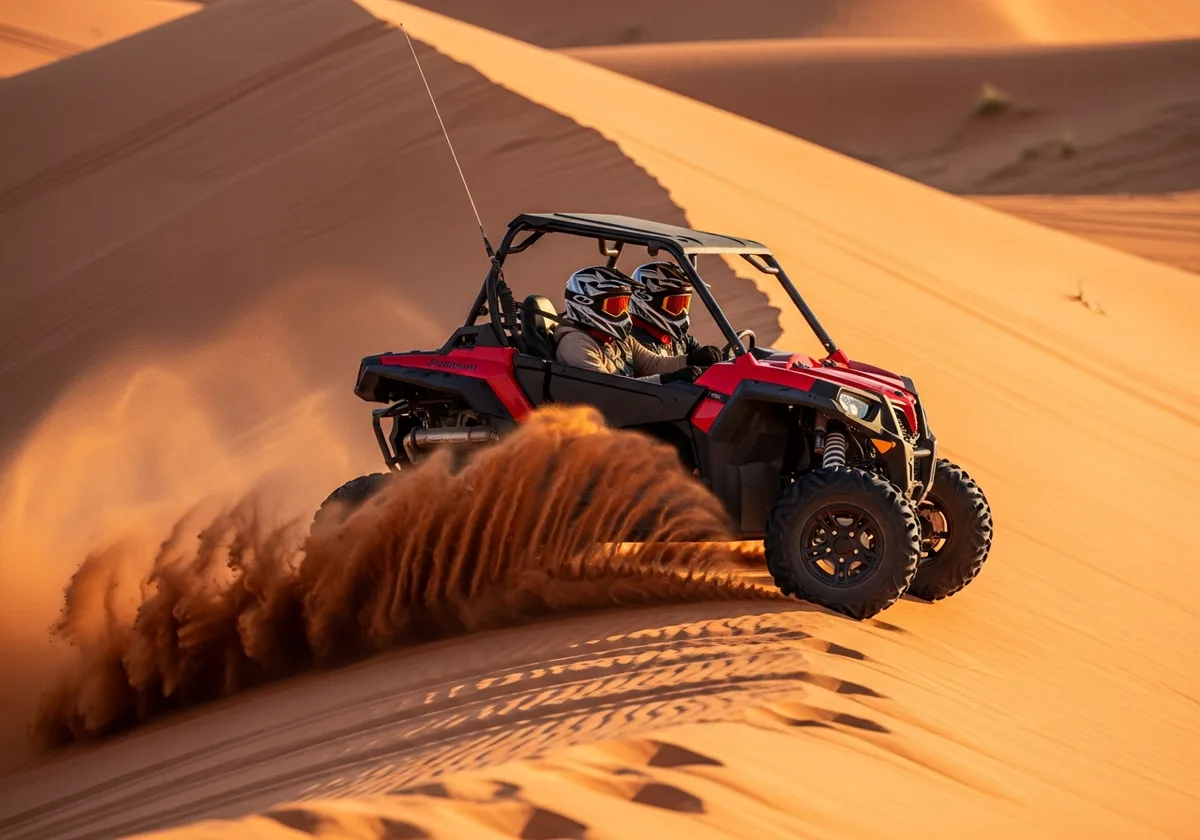
The way the engine delivers power matters just as much as the number of cubic centimetres. Some buggies use a carburettor that can flood on steep angles. Others have electronic fuel injection that adjusts the mixture automatically. If you plan to tackle tall dunes where the vehicle tilts sharply, an engine that can handle those angles without coughing is worth prioritising. The last thing you want is to lose power halfway up a steep face.
Brake System and Steering Control
Coming down a dune is harder than going up. The sand shifts under the wheels, and gravity pulls the buggy forward faster than you might expect. A reliable brake system is essential. Look for disc brakes on all four wheels rather than drum brakes on the rear only. Disc brakes dissipate heat better and give you more consistent stopping power even after repeated hard use on long descents.
The steering wheel setup also affects how confidently you can navigate the desert. A standard car-style wheel with power steering feels familiar but can be slow to react in deep sand. A smaller-diameter wheel, often found on purpose-built desert buggies, lets you turn the tyres faster with less hand movement. That quick response helps when you need to correct a slide or dodge a hidden rock. Test the steering before you commit. If the wheel feels loose or has too much play, the buggy will wander on straight sections and feel twitchy when you need precision.
Tyres and Traction
Tyres are the only part of the buggy that touches the ground. In the desert, they need to do two things at once: grip the sand enough to push the vehicle forward, yet release it quickly so the tyres do not dig themselves into a hole. Wide, paddle-style tyres are common on dune buggies because they spread the weight over a larger surface area. That helps the buggy float on top of the sand rather than plough through it.
Check the tread pattern. Deep, widely spaced treads work well in soft dunes. Shallower, closer-spaced treads suit mixed terrain with gravel patches. Some buggies let you adjust the tyre pressure. Dropping the pressure a few psi increases the footprint and improves traction on loose sand. Just remember that lower pressure makes the tyres more prone to damage on sharp rocks, so find a balance that suits the trail.
Comfort and Protection for the Rider
Desert driving is physically demanding. The sun beats down, the sand flies up, and the buggy shakes over every bump. A good buggy protects you from the worst of it. A padded seat with a high back supports your spine when the vehicle bounces. A harness with shoulder straps keeps you in place so you do not slide around on steep angles.

Dust goggles are not optional in the desert. Even with a windscreen, fine sand gets into the air and irritates the eyes. Goggles with anti-fog lenses and a secure strap make a huge difference on a long ride. Some buggies come with a full roll cage and side nets that keep larger debris out while still letting air through. If you plan to ride in a group or on a busy trail, a buggy with a flag mount or a bright-coloured frame helps others spot you from a distance.
At this point, you might be wondering where to start looking for a buggy that fits these criteria. Many riders find it helpful to browse the options available on a site like dunebuggyrentalsdubai.com to see what models are commonly used in the region and compare their specifications side by side. Seeing the actual vehicles listed gives you a practical reference for the features discussed here.
Reading the Trail Map and Planning Your Route
Knowing the terrain before you drive makes a real difference. A trail map of the area shows you the height of the dunes, the location of harder-packed tracks, and any areas where the sand is too soft for a standard buggy. Some maps mark hazards such as steep drop-offs or wadis that can trap an inexperienced driver. Even if you are renting a buggy for a single day, ask for a map or a digital route file. It helps you choose a vehicle that can handle the specific challenges of the trail you plan to ride.
If the route includes long stretches of flat desert, a buggy with a higher top speed and a comfortable seat makes the journey more pleasant. If the route is mostly steep dunes, prioritise torque, ground clearance, and a robust brake system. Matching the buggy to the map prevents unpleasant surprises halfway through the trip.
Weight Capacity and Passenger Load
A two-seater buggy handles differently from a four-seater. The extra weight changes how the vehicle climbs and brakes. If you are driving with a passenger, consider the combined weight. A buggy designed for a single rider may feel sluggish with two adults on board. Check the manufacturer's weight limit and stay within it. Overloading the buggy strains the engine, reduces ground clearance, and makes the brake system work harder than intended.
For group outings, it is often better to use multiple two-seater buggies rather than one large vehicle. They are more manoeuvrable and each driver has full control. If you do need a larger buggy, look for one with a reinforced frame and a larger engine to compensate for the extra mass.
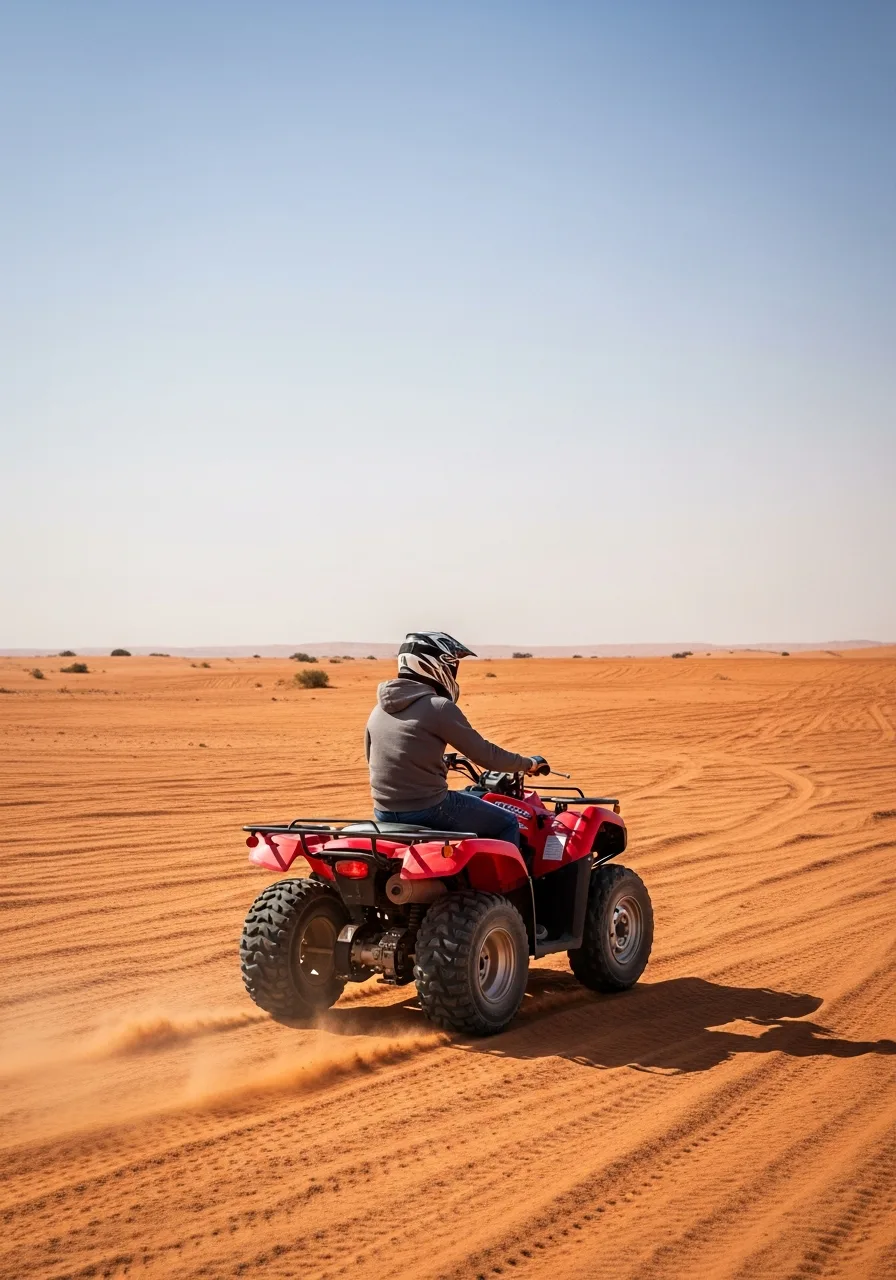
Final Checks Before You Head Out
Before you drive, run a quick inspection. Check the tyre pressure and look for cuts or bulges in the rubber. Test the brakes at low speed. Make sure the steering feels tight and does not have excessive play. Confirm that the harness latches securely and that the seat does not shift on its mount. If the buggy has a kill switch or an emergency shut-off, know where it is and how it works.
Carry a basic repair kit if the rental allows it. A shovel, a tow strap, and a portable air compressor can solve common problems on the trail. Let someone know your planned route and expected return time. The desert is vast and mobile reception can be patchy. A little preparation turns a good day into a great one.
Choosing the right dune buggy for Dubai's desert is about understanding how the vehicle's design matches the conditions you will actually encounter. Start with the frame and ground clearance, then move to the engine and brakes. Factor in the tyres, the comfort features, and the route you plan to take. A site like dunebuggyrentalsdubai.com can help you compare models and see what is available, but the final decision comes down to what feels right for the terrain and your own driving style. Take your time, ask questions, and pick a buggy that makes the desert feel like a playground rather than a struggle.